

Although we have a milling machine, we find that a dental laboratory can do a better job at fabricating a crown and then glazing it to make sure it’s as smooth as possible. The lab has trained dental technicians that are very good at what they do. Crowns that are milled in dental offices have to have thicker margins, so more tooth structure has to be removed to allow for the thicker margins. We find that a lab is able to do a better job with making the best crown possible, so we choose to utilize the dental lab professionals.

Although this may not be as convenient as a same day crown, it can help to avoid tooth sensitivity, as we can be more conservative and take off less tooth structure. It is also a guarantee that your crown has all the attention it deserves from a lab technician, without rushing to deliver the same-day crown before the numbness wears away.
shutterstock 353764442

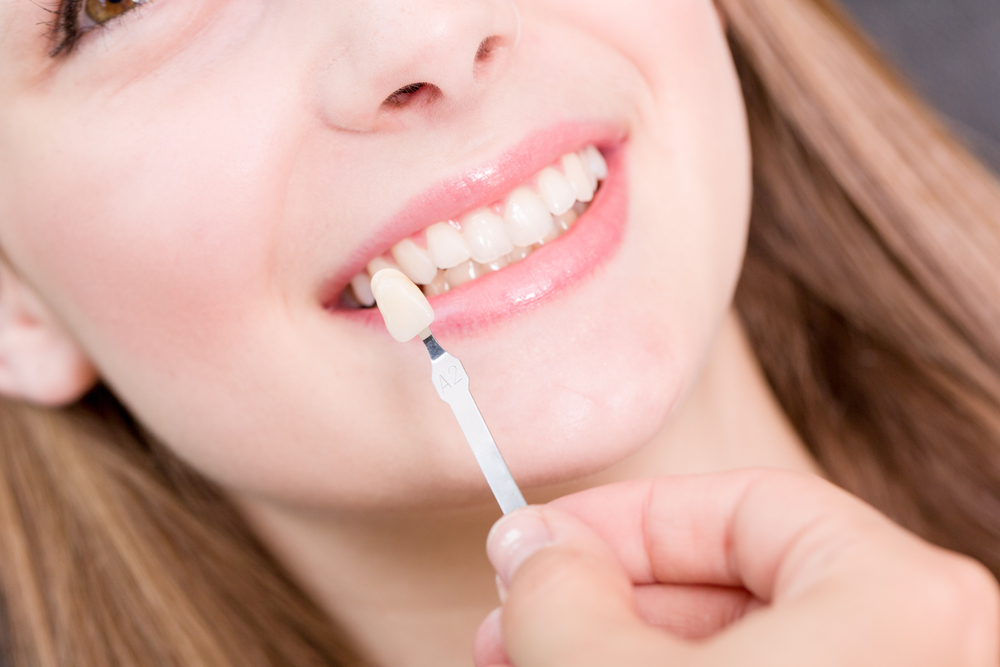
A dental crown is a tooth-shaped cap that is bonded or cemented onto a tooth that has lost some of its shape most often through trauma or decay. We do our best to avoid crowns, and choose more conservative options such as onlays or composite restorations. When it is not possible to predictably restore a tooth with a filling or another more-conservative restoration, then the tooth is shaped to accept a cap (crown), and a cap is made in the shape of a tooth. The crown is tried in, any adjustments are made, and it is cemented or bonded onto the tooth, thereby restoring the function that was lost.

FAQ’S

In our office, we always aim to provide the least invasive treatment possible for each individual case. However, sometimes a simple filling is not an option. In those situations, the doctor may recommend an onlay, or crown. The advantages and disadvantages of each option will be carefully explained and discussed before proceeding with treatment.

A dental crown is a dental cap that aims to protect a weak and damaged tooth. 
With proper care and regular maintenance, your crown can last for 15-20 years, but patients with a high cavity risk may find that their crowns last closer to 5 years.
If a tooth is at high risk of fracturing, or if part of it has already broken, a dental crown can help protect the remaining structure. By covering and reinforcing the tooth, the crown prevents further damage that could make the tooth unsalvageable.
You may treat a crown just like every other tooth, but pay special attention to ensure that the margins of the crown are clean by brushing towards the margin, and flossing daily. 
There may be some mild discomfort at first, but the greatest majority of the time there are no symptoms other than slightly sore gums due to placing the margins at or under the gum level. 

Want to request an appointment?